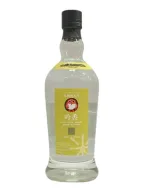
Rice shochu is light enough to let the tea lead, which is how it is drunk with dinner in Kyushu.
Chamomile is faint enough to be lost, and a smooth bottle leaves it the room it needs. Cold-brewed chamomile as a lengthener, or steeped in the spirit.
One part shochu to three or four parts of the long mixer, over plenty of ice, then the accent on top. If it tastes thin, go two to three next time.
What it tastes like
Kome shochu from Takahashi Shuzo in Kumamoto. Published tasting notes: floral, smooth, soft. The profile below is built from the tasting notes published for it.
rice
floral
smooth
soft
aged
Sweet
2/5
Body
3/5
Aroma
4/5
Fruit
2/5
Floral
3/5
Grain
3/5
Earth
1/5
Umami
1/5
Read from the words above rather than measured. Where it says not described, none of the sources behind this page mention it, which is not the same as it not being there.
Base
rice with rice koji, fermented at low temperature with ginjo yeast
Koji
white koji
Distillation
single vacuum (reduced pressure) distillation
ABV
24%
Aging
6 months
What to mix with it
Tap a family to narrow it down. Every suggestion carries its reasoning, so if the reasoning does not convince you, ignore the suggestion.
A longer wedge is a family we'd reach for sooner with this bottle, worked out from its flavours rather than tasted. It isn't a score, or a comparison with other bottles.
Dolin dry or Noilly Prat. A quarter of the shochu's volume, stirred cold.
Rice shochu and dry vermouth, stirred, is a martini that tastes of its base instead of juniper
Rice shochu, dry vermouth, a lemon twist
The bottle is already floral, and this puts more of that in the glass.
Rice shochu stirred with vermouth is a martini with koji where the juniper was. The strength depends on the bottle, not on the swap. Most shochu is 25 and lands well under a gin martini. The 40 percent bottles land beside one.
A Miyazaki citrus eaten with the white pith left on, which is sweet rather than bitter. Gentler and more floral than lemon, so it flavours a drink without taking it over.
Rice sweetness wants acid, and citrus is the most direct way to give it some.
Softer acid than lemon, so the rice sweetness stays in the glass
The bottle is already floral, and this puts more of that in the glass.
Harder to find outside Japan than most of this list. Worth ordering or a trip to a Japanese grocery, and where something easier works as well, that comes first.
Luxardo. It is sweetened, whatever the name suggests: their own account of the process ends by adding a syrup of water and sugar to bring it to 32 percent. What makes it read as dry is the stone. The cherries sit in larch vats for up to three years, pits, leaves and all, before the lot is distilled and the heart rested in ash, and that almond bitterness arrives before the sugar does. So measure it as a sweetener that tastes bitter, not as a dry modifier, and a bar spoon changes a stirred drink completely.
Maraschino is what makes a stirred aged drink taste finished rather than flat
The bottle is already floral, and this puts more of that in the glass.
Luxardo. It is sweetened, whatever the name suggests: their own account of the process ends by adding a syrup of water and sugar to bring it to 32 percent. What makes it read as dry is the stone. The cherries sit in larch vats for up to three years, pits, leaves and all, before the lot is distilled and the heart rested in ash, and that almond bitterness arrives before the sugar does. So measure it as a sweetener that tastes bitter, not as a dry modifier, and a bar spoon changes a stirred drink completely.
The Japanese citrus that tastes like grapefruit, mandarin and lemon at once, with a floral peel. A little zest or juice goes a long way.
Rice sweetness wants acid, and citrus is the most direct way to give it some.
Yuzu's perfume sits beside floral notes instead of covering them
The classic pair: rice sweetness under yuzu zest
Harder to find outside Japan than most of this list. Worth ordering or a trip to a Japanese grocery, and where something easier works as well, that comes first.
The cordial, sweet and alcohol-free, poured like a syrup. Muscat, lychee and honey in one flower. The liqueur has its own entry below: a different product rather than a stronger or weaker version of this one, and it brings alcohol along with the flower.
Nothing here is sharp enough to cut the elderflower down, so it survives at the strength it was poured
Elderflower on a floral bottle is the obvious spritz
The cleanest of the shochu bases, so a flower actually reads instead of being swallowed.
St-Germain or similar: the flower with alcohol behind it, for stirred drinks. A half ounce is enough. For a long drink, the cordial above does the same flavour without the proof.
The liqueur version of the flower, for stirred drinks
Shochu, elderflower liqueur, lemon: a sour that tastes like spring
St-Germain or similar: the flower with alcohol behind it, for stirred drinks. A half ounce is enough. For a long drink, the cordial above does the same flavour without the proof.
Mikawa Mirin from Sumiya Bunjiro Shoten, made from glutinous rice, koji and shochu since 1911 with no added sugar. Not the sweetened seasoning sold as mirin-fu chomiryo, which is a different product.
The bottle already smells of rice, and this puts more of it in the glass.
Mikawa Mirin from Sumiya Bunjiro Shoten, made from glutinous rice, koji and shochu since 1911 with no added sugar. Not the sweetened seasoning sold as mirin-fu chomiryo, which is a different product.
Hana Makgeolli is brewed in Greenpoint, Brooklyn; Makku sells a canned one. Strength varies widely across the category, from around 6 percent in a can to the mid teens for an unfiltered takju, so read the label before deciding how much to pour.
The bottle already smells of rice, and this puts more of it in the glass.
Hana Makgeolli is brewed in Greenpoint, Brooklyn; Makku sells a canned one. Strength varies widely across the category, from around 6 percent in a can to the mid teens for an unfiltered takju, so read the label before deciding how much to pour.
Sweet, low-acid Japanese mandarin. Juice it or drop segments in a glass. It needs a squeeze of something sharper alongside.
Rice sweetness wants acid, and citrus is the most direct way to give it some.
Mikan juice over rice sweetness is gentle and familiar
Harder to find outside Japan than most of this list. Worth ordering or a trip to a Japanese grocery, and where something easier works as well, that comes first.
A small green citrus from Tokushima, sharper and more herbal than lime. Sold frozen or as juice in Japanese markets.
Rice sweetness wants acid, and citrus is the most direct way to give it some.
Squeezed over rice, it is the flavor of a Japanese autumn table
Harder to find outside Japan than most of this list. Worth ordering or a trip to a Japanese grocery, and where something easier works as well, that comes first.
Food-grade citric and malic powder from the canning aisle, 10 grams whisked into 100 grams of cold water; two parts citric to one malic is close to lime. Some bartenders find a drink with no juice in it thin, so it is worth trying both ways.
Sourness with nothing attached to it, so the bottle's own perfume stays in front
Food-grade citric and malic powder from the canning aisle, 10 grams whisked into 100 grams of cold water; two parts citric to one malic is close to lime. Some bartenders find a drink with no juice in it thin, so it is worth trying both ways.
Dolin blanc. Sweeter and more floral than dry; for the aromatic bottles. Lillet Blanc stands in the same place in a drink, but its maker says plainly that it is a wine aperitif and not a vermouth, because there is no wormwood in it.
Blanc vermouth's flowers and vanilla meet floral bottles
Rice shochu stirred with vermouth is a martini with koji where the juniper was. The strength depends on the bottle, not on the swap. Most shochu is 25 and lands well under a gin martini. The 40 percent bottles land beside one.
Carpano Antica or Cocchi. A quarter of the shochu's volume, stirred cold, makes a manhattan-style drink: on a 25 percent shochu that is about 23 before the ice gets to it, where a 40 percent rye starts nearer 35.
An aged bottle already has the caramel a manhattan wants; this brings the botanicals
Rice shochu stirred with vermouth is a martini with koji where the juniper was. The strength depends on the bottle, not on the swap. Most shochu is 25 and lands well under a gin martini. The 40 percent bottles land beside one.
Cocchi Americano: moscato steeped with cinchona bark, gentian and bitter orange. The bark is the point of it, and it carries a quinine bitterness no citrus will give you.
The bottle is already floral, and this puts more of that in the glass.
Cocchi Americano: moscato steeped with cinchona bark, gentian and bitter orange. The bark is the point of it, and it carries a quinine bitterness no citrus will give you.
Ayagiku's, on a shochu base, or Kikusui's. Quince is too hard and astringent to eat raw, so the liqueur is the convenient way to get that scent into a glass; it opens up in hot water.
The perfume sits beside a floral bottle rather than over it
Ayagiku's, on a shochu base, or Kikusui's. Quince is too hard and astringent to eat raw, so the liqueur is the convenient way to get that scent into a glass; it opens up in hot water.
Harder to find outside Japan than most of this list. Worth ordering or a trip to a Japanese grocery, and where something easier works as well, that comes first.
Jack Rudy's Extra Bitter, made with real cinchona bark, or Small Hand Foods'. Half a teaspoon and soda, set to the bottle in front of you rather than to a tonic maker's idea of a spirit.
Bottled tonic's sugar is set for a 40 percent spirit, which is why shochu tonics can taste like lemonade
Jack Rudy's Extra Bitter, made with real cinchona bark, or Small Hand Foods'. Half a teaspoon and soda, set to the bottle in front of you rather than to a tonic maker's idea of a spirit.
Oita's citrus, softer than sudachi. Bartenders in Oita mix it with the local barley shochu and soda.
Rice sweetness wants acid, and citrus is the most direct way to give it some.
Harder to find outside Japan than most of this list. Worth ordering or a trip to a Japanese grocery, and where something easier works as well, that comes first.
Okinawa's own citrus, picked green and sharp, more bitter than lime and more floral than sudachi. Squeezed over awamori and soda it is what the islands actually drink.
Rice sweetness wants acid, and citrus is the most direct way to give it some.
Harder to find outside Japan than most of this list. Worth ordering or a trip to a Japanese grocery, and where something easier works as well, that comes first.
Juice and peel are two different tools. Fresh juice, never bottled, is the whole basis of the lemon sour and the quickest way to put acid into a distilled base. The peel expressed over the top gives the oil and no acid at all, which is what a sweet or roasted bottle usually wants instead.
Rice sweetness wants acid, and citrus is the most direct way to give it some.
Fresh lemon reads harsh against aged, caramel notes
Rice sweetness wants acid, and lemon is the simplest acid there is
Cold-pressed juice or thin slices. Green apple is already in the aroma of a lot of rice shochu, so this amplifies what is there rather than adding something new.
Rice shochu distilled with ginjo yeast carries apple and melon esters already, so orchard fruit is amplification.
D.O.M. Bénédictine, on most back bars. Rounder and much sweeter than the alpine liqueurs, so it suits bottles that already lean sweet rather than clean.
D.O.M. Bénédictine, on most back bars. Rounder and much sweeter than the alpine liqueurs, so it suits bottles that already lean sweet rather than clean.
Giffard's white, or Tempus Fugit's, which is a pale brown rather than colourless. Tempus Fugit publishes 24 percent, so on a 25 percent shochu an ounce lengthens rather than fortifies, and on a 40 percent bottle it pulls the strength down.
Giffard's white, or Tempus Fugit's, which is a pale brown rather than colourless. Tempus Fugit publishes 24 percent, so on a 25 percent shochu an ounce lengthens rather than fortifies, and on a 40 percent bottle it pulls the strength down.
Two slices from any Asian grocery, seeds out. It keeps getting more bitter the longer it sits, so taste as you go and pull the slices when it is where you want it.
A light rice spirit takes a green, quiet garden note. Anything savoury leads instead of following.
Zuiyo's Kuririn, from Japanese chestnuts at 11 percent, or Dover's wa-shu kuri, which is on a rum base. A dessert direction, and not the same thing as kuri shochu, which is a base spirit.
Zuiyo's Kuririn, from Japanese chestnuts at 11 percent, or Dover's wa-shu kuri, which is on a rum base. A dessert direction, and not the same thing as kuri shochu, which is a base spirit.
Blandy's or Barbeito, ten year. It is the one fortified wine that brings real acid, so it can do the lemon's job on a bottle where fresh citrus reads harsh.
Blandy's or Barbeito, ten year. It is the one fortified wine that brings real acid, so it can do the lemon's job on a bottle where fresh citrus reads harsh.
Torn leaves steeped briefly. Perfumed citrus without juice.
The bottle is already floral, and this puts more of that in the glass.
Harder to find outside Japan than most of this list. Worth ordering or a trip to a Japanese grocery, and where something easier works as well, that comes first.
Bitter orange: sour and aromatic rather than sweet, the citrus that goes into ponzu. Bottled juice is sold for cooking and works straight in a glass. Use the peel too, it carries most of the smell.
Rice sweetness wants acid, and citrus is the most direct way to give it some.
Daidai's bitterness sits on top of a delicate floral bottle rather than beside it
The peel is doing what the orange twist on an old fashioned does
Harder to find outside Japan than most of this list. Worth ordering or a trip to a Japanese grocery, and where something easier works as well, that comes first.
The non-alcoholic koji drink, sweet from rice starch alone. Blend with the spirit and ice; it is a shochu smoothie.
Koji rice porridge on a rice drink; the same koji, before and after fermentation
Harder to find outside Japan than most of this list. Worth ordering or a trip to a Japanese grocery, and where something easier works as well, that comes first.
Young sansho leaves, clapped between the palms and floated. Hard to find outside Japanese markets in spring, worth the hunt.
The classic spring garnish for rice dishes; it belongs on rice wine too
Harder to find outside Japan than most of this list. Worth ordering or a trip to a Japanese grocery, and where something easier works as well, that comes first.
A pinch of ground sansho over the top, or a few peppercorns steeped. Numbing, citrusy, green.
Sansho and rice is a Kyoto kitchen
Harder to find outside Japan than most of this list. Worth ordering or a trip to a Japanese grocery, and where something easier works as well, that comes first.
Dewazakura's from Yamagata plums, or Machida Shuzo's on Amami kokuto shochu. It does umeshu's job and leaves the glass drier, which matters when the bottle is already sweet.
Dewazakura's from Yamagata plums, or Machida Shuzo's on Amami kokuto shochu. It does umeshu's job and leaves the glass drier, which matters when the bottle is already sweet.
Harder to find outside Japan than most of this list. Worth ordering or a trip to a Japanese grocery, and where something easier works as well, that comes first.
The Korean-style yuzu preserve sold in jars. A spoon in hot water with shochu, or shaken cold.
Hot water, rice shochu, a spoon of yuzu tea
Harder to find outside Japan than most of this list. Worth ordering or a trip to a Japanese grocery, and where something easier works as well, that comes first.
Lustau or González Byass. Fino is salt and living flor; this is what is left after the flor dies, and at 18 percent an ounce lengthens the glass rather than strengthening it.
Oxidation sits on top of a delicate perfume rather than beside it
Both have spent years going quietly brown, and they meet in the middle
Lustau or González Byass. Fino is salt and living flor; this is what is left after the flor dies, and at 18 percent an ounce lengthens the glass rather than strengthening it.
Barrow's Intense, made in Brooklyn, or Domaine de Canton, which is the easier one to find. Ginger and sugar arrive together either way, and both work hot as well as cold. Being spirits themselves they add alcohol along with the volume, which a juice or a syrup does not.
Ginger heat walks over a delicate bottle
Warm spice against caramel, without the sugar a ginger beer brings
Barrow's Intense, made in Brooklyn, or Domaine de Canton, which is the easier one to find. Ginger and sugar arrive together either way, and both work hot as well as cold. Being spirits themselves they add alcohol along with the volume, which a juice or a syrup does not.
Braulio, made in Bormio from gentian, juniper, peppermint and yarrow, around forty-five dollars. A summer drink on shochu and a winter one on whisky, which is one bottle behaving two ways.
Braulio, made in Bormio from gentian, juniper, peppermint and yarrow, around forty-five dollars. A summer drink on shochu and a winter one on whisky, which is one bottle behaving two ways.
Cynar, 16.5 percent, which is weaker than most shochu, so equal parts with a 25 percent bottle lands near 20 and the drink stays long. Soda or a grapefruit soda over the top is the producer's own serve.
Cynar, 16.5 percent, which is weaker than most shochu, so equal parts with a 25 percent bottle lands near 20 and the drink stays long. Soda or a grapefruit soda over the top is the producer's own serve.
The Japanese Bitters, five 100ml expressions, sold at Astor Wines in New York. Angostura at nearly 45 percent is a small spike in a 25 percent drink in a way these are not.
The Japanese Bitters, five 100ml expressions, sold at Astor Wines in New York. Angostura at nearly 45 percent is a small spike in a 25 percent drink in a way these are not.
Ways to serve it
Straight
On the rocks
Rice shochu is what happens when you distil something very close to sake. It carries the same apple and melon aromatics, which makes it the shochu that behaves most like a white spirit in a stirred drink.
Cocktails other people made
We haven't found a cocktail written for this exact bottle. These were written for other bottles, so each one says which, and what changes if you pour this instead.
If a recipe calls for something else and this is what you have. The verdict is for this bottle rather than for its style, so a bottle without the strength a stirred drink needs is not offered for one.