Hot water (oyuwari), in a warm cup. Grapefruit with it.
Hot water is the Kagoshima serve and it earns its reputation: heat pulls the earth and the sweetness up out of the glass. Cold water does the opposite and lengthens it without changing its shape.
Citrus acid cuts sweet potato's weight. That's why Kagoshima bars reach for grapefruit and yuzu before anything else. Bitter, bright and forgiving. Ruby or white both work; white is drier. The grapefruit sour is a real bar order in Japan, not a novelty.
Hot water in the cup first, then the shochu, six parts shochu to four of water. No ice. Then the accent on top. If it's too strong, a little more water next time.
What it tastes like
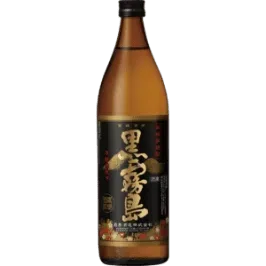
Black koji imo shochu with deep umami, a silky mouthfeel and a subtle roasted sweetness that stays refined without losing its assertiveness. One of the most respected sweet potato shochu coming out of Kyushu.
sweet potato
roasted sweet potato
umami
silky
earthy
rich
Sweet
3/5
Body
4/5
Aroma
3/5
Fruit
not described
Floral
not described
Grain
1/5
Earth
4/5
Umami
4/5
Read from the words above rather than measured. Where it says not described, none of the sources behind this page mention it, which is not the same as it not being there.
Base
Kyushu-grown sweet potato with domestic rice koji, and Kirishima rekkasui, the groundwater from the range's lava fissures
Koji
black koji
ABV
25%
What to mix with it
Tap a family to narrow it down. Every suggestion carries its reasoning, so if the reasoning does not convince you, ignore the suggestion.
A longer wedge is a family we'd reach for sooner with this bottle, worked out from its flavours rather than tasted. It isn't a score, or a comparison with other bottles.
Warm kombu-and-bonito stock, lightly seasoned, mixed with the spirit. It sounds strange and tastes like an oden counter.
Roast and dashi are both savoury rather than sweet, which is the half of an imo most drinks ignore
Warm dashi carries a spirit's savoury side forward the way hot water carries its aroma
Oden broth and imo shochu in one cup: a Kagoshima winter
Salt does not make a drink salty in small amounts. It makes a savoury bottle taste more like itself. The pairing reads as strange and drinks as obvious.
Hot water in the glass first, spirit poured on top so it mixes itself. Around 40C in the glass is the sweet spot. This is not the only way, it is one way.
Hot water is the Kagoshima serve and it earns its reputation: heat pulls the earth and the sweetness up out of the glass. Cold water does the opposite and lengthens it without changing its shape.
Oyuwari is what a roasted imo is built for: the heat puts the roast back in the air
Oyuwari: hot water first, then shochu, six of shochu to four of water. Imo shochu opens up in warmth
Heat pulls the earth and the sweetness out of a bottle
A pinch in the glass or a half rim. Salt does not make a drink salty in small amounts; it makes it taste more like itself.
A few grains do to a roasted potato what they do to one out of an oven
Salt is the fastest way to make umami louder
A salt rim on an imo shochu drink is a Kagoshima bar trick
Salt does not make a drink salty in small amounts. It makes a savoury bottle taste more like itself. The pairing reads as strange and drinks as obvious.
White miso whisked into a syrup, a small spoon per drink. Salty, sweet and savory at once.
Umami on umami
Miso and roasted sweet potato is a Kagoshima side dish
Salt does not make a drink salty in small amounts. It makes a savoury bottle taste more like itself. The pairing reads as strange and drinks as obvious.
Salt is the fastest way to make an earthy bottle taste like more of itself.
One salted plum, crushed with a spoon in the glass. Salty, sour, savory.
Imo shochu, hot water, umeboshi: a Kagoshima winter
Salt and sour pull umami forward
Salt does not make a drink salty in small amounts. It makes a savoury bottle taste more like itself. The pairing reads as strange and drinks as obvious.
Umeboshi in hot shochu is a Kagoshima winter, and salt is the fastest way to make an earthy bottle taste like more of itself.
Cynar, 16.5 percent, which is weaker than most shochu, so equal parts with a 25 percent bottle lands near 20 and the drink stays long. Soda or a grapefruit soda over the top is the producer's own serve.
Vegetal bitterness against earth, which is a closer match than a caramel amaro makes
With a 25 percent bottle under it the bitterness reads as celery and walnut skin instead of being scorched off
There is enough weight here to stand up to a bitter or a spice without disappearing under it.
Cynar, 16.5 percent, which is weaker than most shochu, so equal parts with a 25 percent bottle lands near 20 and the drink stays long. Soda or a grapefruit soda over the top is the producer's own serve.
Sakamoto's, fermented outdoors in earthenware jars in Fukuyama and aged at least a year; Toiro and Japanese Taste ship it in the US. A teaspoon in a mizuwari is the whole intervention, and a second one is usually a mistake.
A vinegar with savour under it rather than only sharpness, so beside a savoury bottle it reads as family instead of contrast
Acid with a savoury depth behind it, which suits the koji side better than a lemon does
An earthy, heavy spirit flattens out without acid. This is the ingredient doing structural work, not decoration.
An earthy bottle has a savoury side already, and these meet it rather than trying to sweeten it away.
Bitter orange: sour and aromatic rather than sweet, the citrus that goes into ponzu. Bottled juice is sold for cooking and works straight in a glass. Use the peel too, it carries most of the smell.
Daidai is the citrus in ponzu, and ponzu is already on the table next to imo shochu
An earthy, heavy spirit flattens out without acid. This is the ingredient doing structural work, not decoration.
Bitter orange: sour and aromatic rather than sweet, the citrus that goes into ponzu. Bottled juice is sold for cooking and works straight in a glass. Use the peel too, it carries most of the smell.
Harder to find outside Japan than most of this list. Worth ordering or a trip to a Japanese grocery, and where something easier works as well, that comes first.
A Miyazaki citrus eaten with the white pith left on, which is sweet rather than bitter. Gentler and more floral than lemon, so it flavours a drink without taking it over.
Hyuganatsu is Miyazaki's citrus and imo shochu is what Miyazaki pours it beside; the soft acid does the same work on a sweet potato bottle from anywhere
An earthy, heavy spirit flattens out without acid. This is the ingredient doing structural work, not decoration.
A Miyazaki citrus eaten with the white pith left on, which is sweet rather than bitter. Gentler and more floral than lemon, so it flavours a drink without taking it over.
Harder to find outside Japan than most of this list. Worth ordering or a trip to a Japanese grocery, and where something easier works as well, that comes first.
The Japanese citrus that tastes like grapefruit, mandarin and lemon at once, with a floral peel. A little zest or juice goes a long way.
Citrus acid cuts sweet potato's weight. That's why Kagoshima bars reach for grapefruit and yuzu before anything else.
Kagoshima bartenders reach for yuzu with imo shochu first
An earthy, heavy spirit flattens out without acid. This is the ingredient doing structural work, not decoration.
Harder to find outside Japan than most of this list. Worth ordering or a trip to a Japanese grocery, and where something easier works as well, that comes first.
Eden Foods sells it as Ume Plum Vinegar in most US supermarkets, and it is one of the cheapest things on this list. A bar spoon, and unlike a crushed umeboshi it can go into a shaken drink.
An earthy, heavy spirit flattens out without acid. This is the ingredient doing structural work, not decoration.
Salt does not make a drink salty in small amounts. It makes a savoury bottle taste more like itself. The pairing reads as strange and drinks as obvious.
Salt is the fastest way to make an earthy bottle taste like more of itself.
A small piece steeped in the bottle overnight. Savory depth without salt.
Kombu pushes the glass further toward the savoury side a bottle with umami is already on
Salt does not make a drink salty in small amounts. It makes a savoury bottle taste more like itself. The pairing reads as strange and drinks as obvious.
Salt is the fastest way to make an earthy bottle taste like more of itself.
Juice and peel are two different tools. Fresh juice, never bottled, is the whole basis of the lemon sour and the quickest way to put acid into a distilled base. The peel expressed over the top gives the oil and no acid at all, which is what a sweet or roasted bottle usually wants instead.
An earthy, heavy spirit flattens out without acid. This is the ingredient doing structural work, not decoration.
Juice and peel are two different tools. Fresh juice, never bottled, is the whole basis of the lemon sour and the quickest way to put acid into a distilled base. The peel expressed over the top gives the oil and no acid at all, which is what a sweet or roasted bottle usually wants instead.
A bar spoon, no more. Salt, and the savory note that comes with it.
Salt brings umami forward
Salt does not make a drink salty in small amounts. It makes a savoury bottle taste more like itself. The pairing reads as strange and drinks as obvious.
Salt is the fastest way to make an earthy bottle taste like more of itself.
A drop. Think of it as salt with depth, for the savory glass only.
A drop of soy in a savoury glass is seasoning rather than flavouring
Salt does not make a drink salty in small amounts. It makes a savoury bottle taste more like itself. The pairing reads as strange and drinks as obvious.
Salt is the fastest way to make an earthy bottle taste like more of itself.
The Japanese Bitters, five 100ml expressions, sold at Astor Wines in New York. Angostura at nearly 45 percent is a small spike in a 25 percent drink in a way these are not.
The Umami expression is kelp, shiitake and bonito, aimed at the savoury side the bottle is described with
There is enough weight here to stand up to a bitter or a spice without disappearing under it.
The Japanese Bitters, five 100ml expressions, sold at Astor Wines in New York. Angostura at nearly 45 percent is a small spike in a 25 percent drink in a way these are not.
Soft water, cold, over ice or not. One to one is normal. Mix a day ahead (maewari) and the edges round off.
Hot water is the Kagoshima serve and it earns its reputation: heat pulls the earth and the sweetness up out of the glass. Cold water does the opposite and lengthens it without changing its shape.
Maewari: mix imo shochu and water a day ahead and it rounds out
Roasted buckwheat, in any Japanese grocery, hot or cold. In a soba restaurant the same serve is made with soba-yu, the starchy water the noodles were boiled in, which is thicker and cannot be bought.
There is enough weight here to stand up to a bitter or a spice without disappearing under it.
Roasted buckwheat, in any Japanese grocery, hot or cold. In a soba restaurant the same serve is made with soba-yu, the starchy water the noodles were boiled in, which is thicker and cannot be bought.
Oita's citrus, softer than sudachi. Bartenders in Oita mix it with the local barley shochu and soda.
An earthy, heavy spirit flattens out without acid. This is the ingredient doing structural work, not decoration.
Oita's citrus, softer than sudachi. Bartenders in Oita mix it with the local barley shochu and soda.
Harder to find outside Japan than most of this list. Worth ordering or a trip to a Japanese grocery, and where something easier works as well, that comes first.
A small green citrus from Tokushima, sharper and more herbal than lime. Sold frozen or as juice in Japanese markets.
An earthy, heavy spirit flattens out without acid. This is the ingredient doing structural work, not decoration.
A small green citrus from Tokushima, sharper and more herbal than lime. Sold frozen or as juice in Japanese markets.
Harder to find outside Japan than most of this list. Worth ordering or a trip to a Japanese grocery, and where something easier works as well, that comes first.
Sweet, low-acid Japanese mandarin. Juice it or drop segments in a glass. It needs a squeeze of something sharper alongside.
Kagoshima bartenders pair imo shochu with mikan when it is in season
Sweet, low-acid Japanese mandarin. Juice it or drop segments in a glass. It needs a squeeze of something sharper alongside.
Harder to find outside Japan than most of this list. Worth ordering or a trip to a Japanese grocery, and where something easier works as well, that comes first.
The Kyushu condiment, in a tube in any Japanese grocer: fermented yuzu peel, green chili and salt. A quarter teaspoon stirred into an oyuwari, which is the serve Asahi publishes.
The salt in it raises the perceived sweetness of koji
Warm spice gives an earthy bottle a pulse without covering the earth itself.
There is enough weight here to stand up to a bitter or a spice without disappearing under it.
Harder to find outside Japan than most of this list. Worth ordering or a trip to a Japanese grocery, and where something easier works as well, that comes first.
Braulio, made in Bormio from gentian, juniper, peppermint and yarrow, around forty-five dollars. A summer drink on shochu and a winter one on whisky, which is one bottle behaving two ways.
There is enough weight here to stand up to a bitter or a spice without disappearing under it.
Braulio, made in Bormio from gentian, juniper, peppermint and yarrow, around forty-five dollars. A summer drink on shochu and a winter one on whisky, which is one bottle behaving two ways.
Hoppy Beverage Co. has made it in Tokyo since 1948; at 0.8 percent it is legally a soft drink, and it is hard to find outside Japan. Chill the bottle, the shochu and the mug and no ice is needed.
The distilleries themselves now sell imo shochu as a highball. Soda lifts the aroma off the glass instead of burying it.
Cocchi Americano: moscato steeped with cinchona bark, gentian and bitter orange. The bark is the point of it, and it carries a quinine bitterness no citrus will give you.
There is enough weight here to stand up to a bitter or a spice without disappearing under it.
Cocchi Americano: moscato steeped with cinchona bark, gentian and bitter orange. The bark is the point of it, and it carries a quinine bitterness no citrus will give you.
Cappelletti Sfumato, where sfumato means smoked and the smoke is the point, or the sweeter Zucca. At 20 percent it can take a third of the glass and still leave the drink weaker than the bottle it started from.
There is enough weight here to stand up to a bitter or a spice without disappearing under it.
Cappelletti Sfumato, where sfumato means smoked and the smoke is the point, or the sweeter Zucca. At 20 percent it can take a third of the glass and still leave the drink weaker than the bottle it started from.
Jack Rudy's Extra Bitter, made with real cinchona bark, or Small Hand Foods'. Half a teaspoon and soda, set to the bottle in front of you rather than to a tonic maker's idea of a spirit.
There is enough weight here to stand up to a bitter or a spice without disappearing under it.
Jack Rudy's Extra Bitter, made with real cinchona bark, or Small Hand Foods'. Half a teaspoon and soda, set to the bottle in front of you rather than to a tonic maker's idea of a spirit.
Food-grade citric and malic powder from the canning aisle, 10 grams whisked into 100 grams of cold water; two parts citric to one malic is close to lime. Some bartenders find a drink with no juice in it thin, so it is worth trying both ways.
An earthy, heavy spirit flattens out without acid. This is the ingredient doing structural work, not decoration.
A pinch of ground sansho over the top, or a few peppercorns steeped. Numbing, citrusy, green.
Warm spice gives an earthy bottle a pulse without covering the earth itself.
There is enough weight here to stand up to a bitter or a spice without disappearing under it.
Harder to find outside Japan than most of this list. Worth ordering or a trip to a Japanese grocery, and where something easier works as well, that comes first.
Lustau or González Byass. Fino is salt and living flor; this is what is left after the flor dies, and at 18 percent an ounce lengthens the glass rather than strengthening it.
Flor leaves a savoury edge behind it, and koji leaves the same one
Barrow's Intense, made in Brooklyn, or Domaine de Canton, which is the easier one to find. Ginger and sugar arrive together either way, and both work hot as well as cold. Being spirits themselves they add alcohol along with the volume, which a juice or a syrup does not.
Ginger and sweet potato is a winter kitchen pairing before it is a bar one
Two slices from any Asian grocery, seeds out. It keeps getting more bitter the longer it sits, so taste as you go and pull the slices when it is where you want it.
Bitterness that answers earth without adding any sweetness to it
Mikawa Mirin from Sumiya Bunjiro Shoten, made from glutinous rice, koji and shochu since 1911 with no added sugar. Not the sweetened seasoning sold as mirin-fu chomiryo, which is a different product.
It adds body and savour where a sugar syrup would only add sugar
Carpano Antica or Cocchi. A quarter of the shochu's volume, stirred cold, makes a manhattan-style drink: on a 25 percent shochu that is about 23 before the ice gets to it, where a 40 percent rye starts nearer 35.
There is enough weight here to carry vermouth without being flattened
Okinawa's own citrus, picked green and sharp, more bitter than lime and more floral than sudachi. Squeezed over awamori and soda it is what the islands actually drink.
A heavy earthy bottle swallows it, and the fruit is too good to waste that way
An earthy, heavy spirit flattens out without acid. This is the ingredient doing structural work, not decoration.
Okinawa's own citrus, picked green and sharp, more bitter than lime and more floral than sudachi. Squeezed over awamori and soda it is what the islands actually drink.
Harder to find outside Japan than most of this list. Worth ordering or a trip to a Japanese grocery, and where something easier works as well, that comes first.
The non-alcoholic koji drink, sweet from rice starch alone. Blend with the spirit and ice; it is a shochu smoothie.
Amazake softens imo shochu into a winter dessert
The non-alcoholic koji drink, sweet from rice starch alone. Blend with the spirit and ice; it is a shochu smoothie.
Harder to find outside Japan than most of this list. Worth ordering or a trip to a Japanese grocery, and where something easier works as well, that comes first.
The Korean-style yuzu preserve sold in jars. A spoon in hot water with shochu, or shaken cold.
Yuzu tea and imo shochu oyuwari is a Kagoshima winter
Harder to find outside Japan than most of this list. Worth ordering or a trip to a Japanese grocery, and where something easier works as well, that comes first.
The cordial, sweet and alcohol-free, poured like a syrup. Muscat, lychee and honey in one flower. The liqueur has its own entry below: a different product rather than a stronger or weaker version of this one, and it brings alcohol along with the flower.
Only for the lychee-scented bottles. On a heavy, roasted imo the flowers simply disappear.
Unsweetened, four parts shochu to six parts soy milk, which is how the Japanese recipes write it. Stronger than it tastes, so pour it knowing that.
Unsweetened, four parts shochu to six parts soy milk, which is how the Japanese recipes write it. Stronger than it tastes, so pour it knowing that.
Ways to serve it
On the rocks
Mizuwari (with water)
Sweet potato shochu is the one people are told they have to drink with hot water. Hot water is genuinely good, and it is also the hardest first sip to sell. Start it long and cold with soda and a wedge of grapefruit, and come back to the hot water once you like the spirit.
Cocktails other people made
We haven't found a cocktail written for this exact bottle. These were written for other bottles, so each one says which, and what changes if you pour this instead.
Written for Aka Kirishima Shochu, also a sweet potato shochu. We have this one as the less fruity of the two, which is what will move most in the glass.
Aka Kirishima is the lighter one, with red berry notes that suit a light, refreshing sparkling drink.
Written for Satsuma Kuradashi Genshu Shochu, also a sweet potato shochu. This bottle is lighter, 25% against 37%, so cut the mixer back or it will disappear.