Skip to content
← Shochumixer

The Ancient Black Rabbit

Yayoishochu Jozosho · Kagoshima · Kokuto (brown sugar)

  • white koji
  • aged
  • honkaku
  • atmospheric distilled
  • cask aged

Pour this first

Ginger beer, tall over ice. Cinnamon with it.

Carbonation carries aroma up out of the glass, so a highball shows an aromatic bottle off rather than diluting the point of it.

One part shochu to three or four parts mixer, over plenty of ice. If it tastes thin, go two to three next time.

What it tastes like

Kokuto shochu from Yayoishochu Jozosho in Kagoshima. Published tasting notes: smoky. The profile below is built from the tasting notes published for it.

  • kokuto
  • smoky
  • cask
  • aged
Sweet
3/5
Body
4/5
Aroma
5/5
Fruit
0/5
Floral
0/5
Grain
1/5
Earth
2/5
Umami
2/5
Base
Brown sugar with rice koji
Koji
white koji
Distillation
atmospheric distillation
ABV
25%
Aging
long-term barrel aged, smoky flavor from wood

What to mix with it

Tap a family to narrow it down. Every suggestion carries its reasoning, so if the reasoning does not convince you, ignore the suggestion.

Explore all 94 pairings
  • Cinnamon

    Strong match

    A stick in hot water with the spirit, or a light syrup. Winter.

    • Cinnamon and aged notes are a hot toddy
    • Brown sugar and cinnamon
    • Cask and cinnamon: an old fashioned instinct
    • There is enough weight here to stand up to a bitter or a spice without disappearing under it.
  • Amaro

    Strong match

    Montenegro, Nonino, Averna. Equal parts with a dark shochu over ice is a whole drink.

    • Brown sugar carries bitterness the way a boulevardier carries whiskey. Amaro and red bitter both land.
    • Amaro and aged notes are a winter bar
    • Cask and amaro
    • Brown sugar and bitter herbs
  • Aromatic bitters

    Strong match

    Angostura or a Japanese aromatic. Two dashes.

    • Bitters, sugar, a cask-aged spirit: an old fashioned
    • Kokuto old fashioned
    • Two dashes wake up an aged bottle
    • There is enough weight here to stand up to a bitter or a spice without disappearing under it.
  • Cold-brewed Earl Grey brings bergamot; plain black tea brings tannin. For the aged and brown-sugar bottles.

    • Coffee and black tea meet the molasses in the bottle rather than arguing with it.
    • Black tea's tannin sits well with aged notes
    • Tea and cask is a Scotch idea
    • Black tea and brown sugar is milk tea logic
  • Cardamom

    Strong match

    A few crushed pods, or a syrup. Floral, citrusy and warm at once; it bridges fruit and spice.

    • Cardamom and brown sugar is a chai
    • Spice on aged, nutty notes
    • There is enough weight here to stand up to a bitter or a spice without disappearing under it.
    • A few crushed pods, or a syrup. Floral, citrusy and warm at once; it bridges fruit and spice.
  • Star anise

    Strong match

    One star, steeped, for the dark bottles.

    • Anise and aged notes are a winter cabinet
    • Star anise and brown sugar is a braise
    • There is enough weight here to stand up to a bitter or a spice without disappearing under it.
    • One star, steeped, for the dark bottles.
  • Vanilla

    Strong match

    A split bean in a syrup, or a good extract, in small amounts.

    • Vanilla is what oak gives; more of it is coherent
    • Brown sugar and vanilla
    • There is enough weight here to stand up to a bitter or a spice without disappearing under it.
    • A split bean in a syrup, or a good extract, in small amounts.
  • Banana

    Strong match

    Ripe banana, muddled or as a syrup. Isoamyl acetate, the ester behind a ginjo aroma, is the same compound that makes a banana smell of banana.

    • Everything the tiki canon does with rum works here, and works better, because the drink does not end the evening.
    • Banana and brown sugar is bananas foster
    • Cask-aged shochu and banana is a bourbon instinct
  • Bitter orange: sour and aromatic rather than sweet, the citrus that goes into ponzu. Bottled juice is sold for cooking and works straight in a glass. Use the peel too, it carries most of the smell.

    • Brown sugar and bitter orange is rum and orange with the sugar turned down
    • The peel is doing what the orange twist on an old fashioned does
    • Bitter orange: sour and aromatic rather than sweet, the citrus that goes into ponzu. Bottled juice is sold for cooking and works straight in a glass. Use the peel too, it carries most of the smell.
  • Kumquat

    Strong match

    Eaten whole, peel and all. Muddle a few in a glass; the peel gives bitterness, the flesh gives tartness.

    • Kumquat's bitter peel stands up to aged, nutty notes
    • A Kyushu winter fruit with a Kyushu winter spirit
    • Eaten whole, peel and all. Muddle a few in a glass; the peel gives bitterness, the flesh gives tartness.
  • Ginger

    Strong match

    Fresh juice, a syrup, or a good ginger beer. The spice that makes a low-proof drink feel like it has a backbone.

    • Ginger and brown sugar is a dark and stormy. Kokuto shochu makes it at half the alcohol.
    • Ginger and brown sugar is a dark and stormy with an Amami accent
    • There is enough weight here to stand up to a bitter or a spice without disappearing under it.
  • Togarashi (chili)

    Strong match

    A rim of shichimi, or a slice of fresh chili. Heat on fruit, not on rice.

    • Brown sugar and chili is a hot honey logic
    • There is enough weight here to stand up to a bitter or a spice without disappearing under it.
    • A rim of shichimi, or a slice of fresh chili. Heat on fruit, not on rice.
  • Carpano Antica or Cocchi. A quarter of the shochu's volume, stirred cold, is a manhattan at well under half the usual proof.

    • An aged bottle already has the caramel a manhattan wants; this brings the botanicals
    • Cask notes and vermouth's spice belong in the same stirred glass
    • Brown sugar and sweet vermouth read as one long caramel note
  • Braulio, made in Bormio from gentian, juniper, peppermint and yarrow, around forty-five dollars. A summer drink on shochu and a winter one on whisky, which is one bottle behaving two ways.

    • Oak rested and 21 percent, so half and half with a cask-aged bottle is one drink at about 23
    • There is enough weight here to stand up to a bitter or a spice without disappearing under it.
    • Braulio, made in Bormio from gentian, juniper, peppermint and yarrow, around forty-five dollars. A summer drink on shochu and a winter one on whisky, which is one bottle behaving two ways.
  • Campari, Aperol, or a Japanese bitter like Kina. Shochu is low enough in proof to make an aperitivo you can actually have two of.

    • Brown sugar carries bitterness the way a boulevardier carries whiskey. Amaro and red bitter both land.
    • Kokuto shochu and red bitter is a boulevardier logic
    • There is enough weight here to stand up to a bitter or a spice without disappearing under it.
  • Coconut

    Good match

    Coconut water for lengthening, coconut milk or cream for weight.

    • Everything the tiki canon does with rum works here, and works better, because the drink does not end the evening.
    • Brown sugar spirit and coconut is Amami and the Caribbean agreeing
  • Fernet

    Good match

    A quarter ounce. Menthol and bitterness, for the darkest bottles.

    • Fernet and cane spirit is an Argentine instinct
    • There is enough weight here to stand up to a bitter or a spice without disappearing under it.
    • A quarter ounce. Menthol and bitterness, for the darkest bottles.
  • Lime

    Good match

    Sharper and greener than lemon. The citrus for anything built on brown sugar or tropical fruit.

    • Cane sugar spirit and lime is the daiquiri, and kokuto shochu is a cane spirit at two thirds the proof.
    • Lime and cane sugar spirit is the oldest pairing in rum, and kokuto shochu is a cane spirit
  • Matcha

    Good match

    Whisked into a slurry first, never dumped in dry. Bitter, umami and creamy at once.

    • Matcha and brown sugar is a wagashi
    • There is enough weight here to stand up to a bitter or a spice without disappearing under it.
    • Whisked into a slurry first, never dumped in dry. Bitter, umami and creamy at once.
  • Orange

    Good match

    Fresh juice when you want it long and easy; the peel when the bottle is aged and the drink is stirred.

    • Orange and brown sugar is a rum punch instinct that carries over
    • Fresh juice when you want it long and easy; the peel when the bottle is aged and the drink is stirred.
  • Pineapple

    Good match

    Fresh juice, or grilled wedges for a smokier drink. The awamori fruit.

    • Everything the tiki canon does with rum works here, and works better, because the drink does not end the evening.
    • Brown sugar spirit, pineapple, lime: that is a daiquiri variation
  • Shikuwasa

    Good match

    Okinawa's own citrus, picked green and sharp, more bitter than lime and more floral than sudachi. Squeezed over awamori and soda it is what the islands actually drink.

    • Okinawa's citrus against Amami's sugar, which is the whole southern islands in a glass
    • Okinawa's own citrus, picked green and sharp, more bitter than lime and more floral than sudachi. Squeezed over awamori and soda it is what the islands actually drink.
  • Black pepper

    Good match

    A few grinds over the top. Aroma more than heat.

    • There is enough weight here to stand up to a bitter or a spice without disappearing under it.
    • A few grinds over the top. Aroma more than heat.
  • Sansho pepper

    Good match

    A pinch of ground sansho over the top, or a few peppercorns steeped. Numbing, citrusy, green.

    • There is enough weight here to stand up to a bitter or a spice without disappearing under it.
    • A pinch of ground sansho over the top, or a few peppercorns steeped. Numbing, citrusy, green.
  • Wasabi

    Good match

    A rice-grain amount, dissolved. For the savory, cucumber glass, not the fruit one.

    • There is enough weight here to stand up to a bitter or a spice without disappearing under it.
    • A rice-grain amount, dissolved. For the savory, cucumber glass, not the fruit one.
  • Yuzu kosho

    Good match

    The Kyushu condiment, in a tube in any Japanese grocer: fermented yuzu peel, green chili and salt. A quarter teaspoon stirred into an oyuwari, which is the serve Asahi publishes.

    • There is enough weight here to stand up to a bitter or a spice without disappearing under it.
    • The Kyushu condiment, in a tube in any Japanese grocer: fermented yuzu peel, green chili and salt. A quarter teaspoon stirred into an oyuwari, which is the serve Asahi publishes.
  • Okinawan or Amami kokuto dissolved one to one in water. Molasses, minerals, a little salt.

    • Brown sugar on brown sugar; the spirit's own raw material
    • Cask and brown sugar is an old fashioned
    • The bottle already brings sugar. Add more only to balance a sharp acid, never to sweeten.
  • Maple syrup

    Good match

    Dark, in small amounts, for the cask and sweet-potato bottles.

    • Maple and oak are a bourbon idea
    • Maple and aged, caramel notes
    • The bottle already brings sugar. Add more only to balance a sharp acid, never to sweeten.
  • Ginger beer

    Good match

    A spicy one, not a sweet one. The mule format works for every dark shochu, and it is the most forgiving way to serve one.

    • Carbonation carries aroma up out of the glass, so a highball shows an aromatic bottle off rather than diluting the point of it.
    • Kokuto shochu and ginger beer is a dark and stormy at half the proof
  • Soda water

    Good match

    Cold, and fizzy enough to matter. One part shochu to three or four parts soda; if it tastes thin, go one to two next time.

    • Carbonation carries aroma up out of the glass, so a highball shows an aromatic bottle off rather than diluting the point of it.
    • Kokuto highball, with a lime
  • Dry cava or crémant. Acid and bubbles in one pour, which is exactly what a distilled spirit has none of.

    • Carbonation carries aroma up out of the glass, so a highball shows an aromatic bottle off rather than diluting the point of it.
    • A kokuto shochu French 75
  • Amaretto

    Good match

    A bar spoon, not an ounce. It is very sweet, and its job here is the almond smell rather than the sugar.

    • Almond and oak is the whole idea behind a nut liqueur in a barrel drink
    • Marzipan against caramel, which is a dessert people already eat
  • Apricot

    Good match

    Fresh in season, dried the rest of the year. Apricot and umeshu share a family, which is why they get along.

    • Long aging turns a spirit towards stone fruit; the apricot joins what is already there
    • Apricot and brown sugar is a jam logic
  • Apricot liqueur

    Good match

    Rothman and Winter, or a Japanese anzu liqueur. Closer to umeshu than to a candy liqueur if you buy a good one.

    • Long aging turns towards stone fruit anyway; this meets it there
    • Apricot and oak is the flavour of an old brandy, at a third of the strength
  • Cherry

    Good match

    Fresh in early summer; morello or amarena in syrup otherwise. Dark cherry for aged bottles, bright cherry for sparkling.

    • Cask notes and cherry is a Manhattan instinct
    • Dark cherry against aged, oxidative notes
  • Cream

    Good match

    Half-and-half or heavy cream, in the after-dinner glass only.

    • Cream and molasses is a flip, and kokuto shochu with milk is an ordinary Amami dessert.
    • Brown sugar spirit and cream is a Kyushu flip
  • Fig

    Good match

    Fresh figs muddled, or fig jam. For the aged and the brown-sugar bottles only.

    • Fig meets the dried fruit that kusu awamori and long aged shochu already carry
    • Fig and brown sugar is a dessert plate
  • Ginger liqueur

    Good match

    Barrow's Intense, made in Brooklyn, is the one to look for: much more ginger and much less sugar than most, so it works as the spice in a drink rather than as the sweetener. Domaine de Canton is the easier one to find and the sweeter one. Either gets you the mule flavour without the sugar load of a ginger beer, and both work hot as well as cold. They carry their own alcohol, so they lengthen a shochu less than a juice or a syrup would.

    • Warm spice against caramel, without the sugar a ginger beer brings
    • Brown sugar and ginger is the oldest warm drink there is
  • Hot water in the glass first, spirit poured on top so it mixes itself. Around 40C in the glass is the sweet spot. This is not the only way, it is one way.

    • Kokuto oyuwari smells of brown sugar candy
    • Hot water in the glass first, spirit poured on top so it mixes itself. Around 40C in the glass is the sweet spot. This is not the only way, it is one way.
  • Milk

    Good match

    Cold whole milk. Shochu milk-wari is a real order in Kyushu, not a dare.

    • Cream and molasses is a flip, and kokuto shochu with milk is an ordinary Amami dessert.
    • Kokuto shochu and milk is an Amami dessert
  • Orange liqueur

    Good match

    Cointreau or a dry curaçao. The sweet-and-citrus half of any sour.

    • Kokuto shochu, orange liqueur, lime: a margarita shape with a cane spirit
    • Aged bottles and orange peel liqueur
  • Unsweetened, four parts shochu to six parts soy milk, which is how the Japanese recipes write it. Stronger than it tastes, so pour it knowing that.

    • Bean sweetness and brown sugar land on the same note
    • Unsweetened, four parts shochu to six parts soy milk, which is how the Japanese recipes write it. Stronger than it tastes, so pour it knowing that.
  • Blood orange

    Good match

    Orange with a raspberry edge. Winter fruit; worth waiting for.

    • Orange with a raspberry edge. Winter fruit; worth waiting for.
  • Cynar, 16.5 percent, which is weaker than the shochu itself, so equal parts lands near 20 percent and the drink stays long. Soda or a grapefruit soda over the top is the producer's own serve.

    • There is enough weight here to stand up to a bitter or a spice without disappearing under it.
    • Cynar, 16.5 percent, which is weaker than the shochu itself, so equal parts lands near 20 percent and the drink stays long. Soda or a grapefruit soda over the top is the producer's own serve.
  • Celery bitters

    Good match

    Scrappy's leads with the seed, Fee Brothers has garlic and ginger behind it, The Bitter Truth reads more astringent than bitter. Two dashes.

    • There is enough weight here to stand up to a bitter or a spice without disappearing under it.
    • Scrappy's leads with the seed, Fee Brothers has garlic and ginger behind it, The Bitter Truth reads more astringent than bitter. Two dashes.
  • Cold brew, unsweetened. For barley, brown-sugar, cask-aged and awamori bottles; it will bury a daiginjo.

    • This bottle's aroma is the reason to own it, and a roasted or smoky mixer covers exactly that.
    • Coffee and black tea meet the molasses in the bottle rather than arguing with it.
    • Brown sugar spirit and coffee is a rum-and-coffee, and Amami makes coffee liqueur from it
    • Cask notes and coffee: think of a coffee old fashioned
  • Suze or Salers. Bitter root, bright yellow. A little in a highball changes everything.

    • There is enough weight here to stand up to a bitter or a spice without disappearing under it.
    • Suze or Salers. Bitter root, bright yellow. A little in a highball changes everything.
  • Grapefruit

    Good match

    Bitter, bright and forgiving. Ruby or white both work; white is drier. The grapefruit sour is a real bar order in Japan, not a novelty.

    • Bitter, bright and forgiving. Ruby or white both work; white is drier. The grapefruit sour is a real bar order in Japan, not a novelty.
  • Cold-brewed sencha, unsweetened. The green tea highball is one of the most common ways shochu is actually drunk in Japan.

    • There is enough weight here to stand up to a bitter or a spice without disappearing under it.
    • Cold-brewed sencha, unsweetened. The green tea highball is one of the most common ways shochu is actually drunk in Japan.
  • Hojicha

    Good match

    Cold-brewed or hot. Roasted green tea, low in bitterness, high in toast. The oyuwari of teas.

    • This bottle's aroma is the reason to own it, and a roasted or smoky mixer covers exactly that.
    • Roasted tea and aged notes are a fireside
    • Hojicha and kokuto is a tea-house dessert
    • There is enough weight here to stand up to a bitter or a spice without disappearing under it.
  • The Japanese Bitters, five 100ml expressions, sold at Astor Wines in New York. Angostura at nearly 45 percent is a small spike in a 25 percent drink in a way these are not.

    • There is enough weight here to stand up to a bitter or a spice without disappearing under it.
    • The Japanese Bitters, five 100ml expressions, sold at Astor Wines in New York. Angostura at nearly 45 percent is a small spike in a 25 percent drink in a way these are not.
  • Jasmine tea

    Good match

    Cold-brewed. Floral without sugar. The jasmine highball is a real menu item in Japan.

    • There is enough weight here to stand up to a bitter or a spice without disappearing under it.
    • Cold-brewed. Floral without sugar. The jasmine highball is a real menu item in Japan.
  • Kabosu

    Good match

    Oita's citrus, softer than sudachi. Bartenders in Oita mix it with the local barley shochu and soda.

    • Oita's citrus, softer than sudachi. Bartenders in Oita mix it with the local barley shochu and soda.
  • Kiwi

    Good match

    Muddled with the seeds. Green, sour and refreshing, and cheap year round.

    • Everything the tiki canon does with rum works here, and works better, because the drink does not end the evening.
  • Lychee

    Good match

    Fresh in early summer, canned in syrup the rest of the year (drain it). The signature aroma of a whole school of imo shochu.

    • Everything the tiki canon does with rum works here, and works better, because the drink does not end the evening.
  • Mango

    Good match

    Ripe mango puree. Needs lime beside it or it goes flat.

    • Everything the tiki canon does with rum works here, and works better, because the drink does not end the evening.
  • Mikan (satsuma)

    Good match

    Sweet, low-acid Japanese mandarin. Juice it or drop segments in a glass. It needs a squeeze of something sharper alongside.

    • Sweet, low-acid Japanese mandarin. Juice it or drop segments in a glass. It needs a squeeze of something sharper alongside.
  • Oolong tea

    Good match

    Unsweetened, cold. One part shochu to three or four parts tea, over ice.

    • There is enough weight here to stand up to a bitter or a spice without disappearing under it.
    • Unsweetened, cold. One part shochu to three or four parts tea, over ice.
  • Passion fruit

    Good match

    The most useful tropical fruit for mixing: intensely aromatic and properly sour. Pulp with seeds, or a good puree.

    • Everything the tiki canon does with rum works here, and works better, because the drink does not end the evening.
  • Pu-erh tea

    Good match

    Loose or bagged, brewed weak: at full strength it takes the glass over. Takara's own guide to tea-wari lists it alongside mugicha and sobacha.

    • There is enough weight here to stand up to a bitter or a spice without disappearing under it.
    • Loose or bagged, brewed weak: at full strength it takes the glass over. Takara's own guide to tea-wari lists it alongside mugicha and sobacha.
  • Sudachi

    Good match

    A small green citrus from Tokushima, sharper and more herbal than lime. Sold frozen or as juice in Japanese markets.

    • A small green citrus from Tokushima, sharper and more herbal than lime. Sold frozen or as juice in Japanese markets.
  • Honey

    Good match

    Diluted one to one with warm water so it mixes cold. A little goes far; taste before adding more.

    • Honey and aged notes
    • The bottle already brings sugar. Add more only to balance a sharp acid, never to sweeten.
  • Almond syrup with a touch of orange blossom. The tiki sweetener, and kokuto shochu is a tiki spirit waiting to happen.

    • Orgeat and cane spirit is a mai tai
    • The bottle already brings sugar. Add more only to balance a sharp acid, never to sweeten.
  • Ginger ale

    Worth trying

    The gentle ginger. For bottles that a ginger beer would bully.

    • Carbonation carries aroma up out of the glass, so a highball shows an aromatic bottle off rather than diluting the point of it.
  • Lemon

    Worth trying

    Fresh juice, never bottled. It is the whole basis of the lemon sour, and the quickest way to put acid into a spirit that has almost none of its own.

    • Fresh lemon reads harsh against aged, caramel notes
    • Brown sugar and lemon is the daiquiri logic, in a lighter spirit
    • Fresh juice, never bottled. It is the whole basis of the lemon sour, and the quickest way to put acid into a spirit that has almost none of its own.
  • The non-alcoholic koji drink, sweet from rice starch alone. Blend with the spirit and ice; it is a shochu smoothie.

    • The non-alcoholic koji drink, sweet from rice starch alone. Blend with the spirit and ice; it is a shochu smoothie.
  • Amontillado sherry

    Worth trying

    Lustau or González Byass. Fino is salt and living flor; this is what is left after the flor dies, and at 18 percent an ounce lengthens the glass rather than strengthening it.

    • Both have spent years going quietly brown, and they meet in the middle
  • Apple

    Worth trying

    Cold-pressed juice or thin slices. Green apple is already in the aroma of a lot of rice shochu, so this amplifies what is there rather than adding something new.

    • Cask-aged bottles have the wood; apple has the orchard
  • Basil

    Worth trying

    Muddled gently with citrus. Thai basil brings anise, Italian basil brings pepper.

    • Muddled gently with citrus. Thai basil brings anise, Italian basil brings pepper.
  • Bénédictine

    Worth trying

    D.O.M. Bénédictine, on most back bars. Rounder and much sweeter than the alpine liqueurs, so it suits bottles that already lean sweet rather than clean.

    • Wood and resin belong in the same stirred glass
  • Blackberry

    Worth trying

    Late summer fruit with a savory edge. For the deeper bottles.

    • Cask and blackberry: think of a whisky smash
  • Dill

    Worth trying

    Fronds, gently muddled. For the savory, saline glass.

    • Fronds, gently muddled. For the savory, saline glass.
  • Egg white

    Worth trying

    One white, dry-shaken. Texture without flavor.

    • One white, dry-shaken. Texture without flavor.
  • Falernum

    Worth trying

    John D. Taylor's Velvet Falernum, about twenty dollars. At 11 percent it behaves like a syrup, so it sweetens and thickens without raising the drink.

    • A cane liqueur from a cane island, poured onto a cane spirit
  • Fino sherry

    Worth trying

    Fino or manzanilla. Savory, salty, bone dry.

    • Oxidative on oxidative
  • Young sansho leaves, clapped between the palms and floated. Hard to find outside Japanese markets in spring, worth the hunt.

    • Young sansho leaves, clapped between the palms and floated. Hard to find outside Japanese markets in spring, worth the hunt.
  • Lemongrass

    Worth trying

    Bruised stalks steeped in the spirit, or a syrup. Citrus without acid, which is useful when you want aroma but not sourness.

    • Bruised stalks steeped in the spirit, or a syrup. Citrus without acid, which is useful when you want aroma but not sourness.
  • Blandy's or Barbeito, ten year. It is the one fortified wine that brings real acid, so it can do the lemon's job on a bottle where fresh citrus reads harsh.

    • Barrel against barrel, except this one brings back the acid the cask took away
  • Makrut lime leaf

    Worth trying

    Torn leaves steeped briefly. Perfumed citrus without juice.

    • Torn leaves steeped briefly. Perfumed citrus without juice.
  • Maraschino

    Worth trying

    Luxardo. Dry rather than sweet despite the name, and a bar spoon changes a stirred drink completely.

    • Maraschino is what makes a stirred aged drink taste finished rather than flat
  • Oat milk

    Worth trying

    The dairy-free milk that tastes of cereal, which is why it likes grain spirits.

    • The dairy-free milk that tastes of cereal, which is why it likes grain spirits.
  • Dried osmanthus flowers steeped, or the syrup. Apricot and honey, and the smell of October in Japan.

    • Honeyed flower on honeyed age
  • Lustau San Emilio. Effectively a raisin syrup that happens to be wine, so a bar spoon sweetens and adds body where sugar syrup would only add sugar.

    • Brown sugar and dried fig, with the sugar already oxidised so it does not read as dessert
  • Sea salt

    Worth trying

    A pinch in the glass or a half rim. Salt does not make a drink salty in small amounts; it makes it taste more like itself.

    • Salt and brown sugar
  • Shiitake

    Worth trying

    A dried shiitake steeped in the spirit for a day. Savory and strange in the best way.

    • A long aged spirit and dried mushroom share a forest floor note
  • Soft water, cold, over ice or not. One to one is normal. Mix a day ahead (maewari) and the edges round off.

    • Warmth brings the molasses forward. Cold water is the better choice if the bottle is already sweet, because it lengthens without pushing the sugar further.
  • Dewazakura's from Yamagata plums, or Machida Shuzo's on Amami kokuto shochu. It does umeshu's job and leaves the glass drier, which matters when the bottle is already sweet.

    • The Amami bottlings are literally kokuto shochu with plum steeped in it
  • Thyme

    Worth trying

    Gentler than rosemary. Steep a sprig, or use a thyme syrup.

    • Gentler than rosemary. Steep a sprig, or use a thyme syrup.
  • Toasted sesame

    Worth trying

    A sesame syrup, or a rim of ground sesame and salt. Toasty and rich.

    • Sesame and brown sugar is a wagashi
  • Cappelletti Sfumato, where sfumato means smoked and the smoke is the point, or the sweeter Zucca. At 20 percent it can take a third of the glass and still leave the drink under 22.

    • This bottle's aroma is the reason to own it, and a roasted or smoky mixer covers exactly that.
    • At 40 percent smoke and alcohol heat compete; at 25 there is no heat to compete with, so the smoke arrives as flavour
    • There is enough weight here to stand up to a bitter or a spice without disappearing under it.
    • Cappelletti Sfumato, where sfumato means smoked and the smoke is the point, or the sweeter Zucca. At 20 percent it can take a third of the glass and still leave the drink under 22.
  • Mint

    Worth trying

    Slapped, not muddled to bits. Mint reads as cold, which makes any low-proof drink feel more refreshing.

    • Mint's brightness argues with aged notes
    • Mint, lime and a cane spirit is a mojito, and Amami has the sugar for it.
    • Brown sugar spirit, mint, lime, soda: a mojito with an Amami accent
  • Agave syrup

    Worth trying

    The neutral sweetener. Use when you want to balance acid without adding a flavor.

    • The bottle already brings sugar. Add more only to balance a sharp acid, never to sweeten.
  • Gum syrup (gomme)

    Worth trying

    Small Hand Foods', or sugar, water and gum arabic from the baking aisle at home. Worth knowing that most Japanese gum syrup on a shelf today has no arabic gum in it at all.

    • The bottle already brings sugar. Add more only to balance a sharp acid, never to sweeten.
  • The Korean-style yuzu preserve sold in jars. A spoon in hot water with shochu, or shaken cold.

    • The bottle already brings sugar. Add more only to balance a sharp acid, never to sweeten.

Ways to serve it

  • On the rocks
  • Mizuwari (with water)

Brown sugar shochu is legally only made on the Amami islands, and it is a cane spirit in everything but name. Every rum drink you know is available to it at two thirds the alcohol.

Cocktails other people made

Nobody has published a cocktail written for this exact bottle. These were written for other bottles, so each one says which, and what changes if you pour this instead.

Show 8 more
  • Nankai Shochu

    Amami Sazerac

    Written for a similar bottle

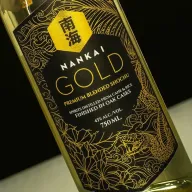
    Written for Nankai Gold Shochu, also a brown sugar shochu. This bottle is lighter, 25% against 43%, so cut the mixer back or it will disappear.

    • 2 oz Nankai Gold
    • 0.25 oz absinthe or Herbsaint, as a rinse
    • 1 sugar cube
    • 0.25 oz fresh lemon juice
    • 2 to 3 dashes aromatic bitters, Peychaud's or Angostura
    • Lemon peel, expressed

    Stirred.

    Full method at Nankai Shochu →
  • Nankai Shochu

    Nankai Coffee Tonic

    Written for a similar bottle

    Written for Nankai Gold Shochu, also a brown sugar shochu. This bottle is lighter, 25% against 43%, so cut the mixer back or it will disappear.

    • 1 oz Nankai Gold
    • 1 oz cold brew coffee
    • 2 oz tonic water
    • 0.5 oz simple syrup
    • Orange peel, for garnish

    Built in the glass.

    Full method at Nankai Shochu →
  • Nankai Shochu · Gersom Gamez

    Habu's Neck, aka the Shochu Buck

    Written for a similar bottle

    Written for Nankai Gold Shochu, also a brown sugar shochu. This bottle is lighter, 25% against 43%, so cut the mixer back or it will disappear.

    • 1.5 oz Nankai Gold
    • 0.5 oz pomelo juice
    • 4 oz ginger beer
    • A long pomelo peel, for garnish

    Built in the glass.

    Full method at Nankai Shochu →
  • Nankai Shochu · Carey Jones and John McCarthy

    Sencha Shochu

    Written for a similar bottle

    Written for Nankai Shochu (Original), also a brown sugar shochu. We have this one as the more aromatic of the two, which is what will move most in the glass.

    • 2 oz Nankai Shochu
    • 0.75 oz fresh lemon juice
    • 0.5 oz simple syrup
    • 1 egg white
    • 1 tbsp sencha tea leaves

    Shaken.

    Full method at Nankai Shochu →
  • Nankai Shochu

    Nankai Greyhound

    Written for a similar bottle

    Written for Nankai Shochu (Original), also a brown sugar shochu. We have this one as the more aromatic of the two, which is what will move most in the glass.

    • 1.5 oz Nankai Shochu
    • 3 oz grapefruit juice
    • 0.5 oz elderflower liqueur
    • A pinch of sea salt, or a salt rimmed glass

    Built in the glass.

    Full method at Nankai Shochu →
  • Nankai Shochu · Carey Jones and John McCarthy

    Shiso Highball

    Written for a similar bottle

    Written for Nankai Shochu (Original), also a brown sugar shochu. We have this one as the more aromatic of the two, which is what will move most in the glass.

    • 1.5 oz Nankai Shochu
    • 3 oz club soda
    • 5 shiso leaves
    • 0.25 oz simple syrup

    Built in the glass, topped with soda.

    Full method at Nankai Shochu →
  • Nankai Shochu

    Hana Hana Highball

    Written for brown sugar shochu

    • 2 oz Nankai Shochu or Nankai Gold
    • 4 oz soda water, the more carbonated the better
    • One third of a lemon, squeezed in

    Built in the glass, topped with soda.

    Full method at Nankai Shochu →

Sources and verification

Filed under kokuto shochu.