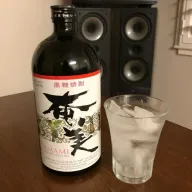
Hot water (oyuwari), in a warm cup. Ginger with it.
Heat carries spice aromatics up out of the glass; cold leaves them sitting in it
Ginger and brown sugar is a dark and stormy. Kokuto shochu makes it at half the alcohol. Fresh juice, a syrup, or a good ginger beer. The spice that makes a low-proof drink feel like it has a backbone.
Hot water in the cup first, then the shochu, six parts shochu to four of water. No ice. Then the accent on top. If it's too strong, a little more water next time.
What it tastes like
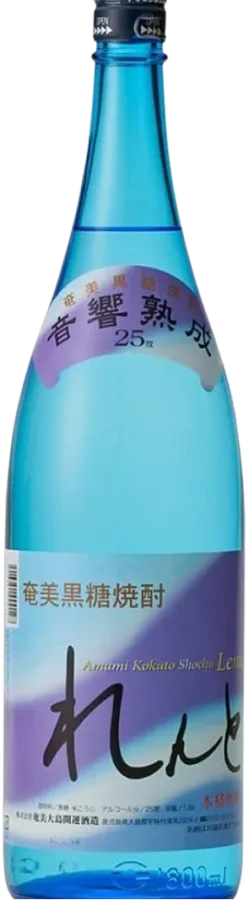
A kokuto shochu matured with classical music played into the tanks through transducers. There is no wood in this: the vibration works on the spirit in the tank, and the producer publishes no cask. Soft and gentle with a rounded, faintly molasses-like character, plus vanilla and a little spice.
kokuto
molasses
vanilla
spice
soft
smooth
rum-like
Sweet
3/5
Body
2/5
Aroma
3/5
Fruit
not described
Floral
not described
Grain
not described
Earth
2/5
Umami
1/5
Read from the words above rather than measured. Where it says not described, none of the sources behind this page mention it, which is not the same as it not being there.
Base
brown sugar (kokuto)
Distillation
vacuum distilled
ABV
25%
Aging
around three months, acoustically agitated with classical music played into the tanks
What to mix with it
Tap a family to narrow it down. Every suggestion carries its reasoning, so if the reasoning does not convince you, ignore the suggestion.
A longer wedge is a family we'd reach for sooner with this bottle, worked out from its flavours rather than tasted. It isn't a score, or a comparison with other bottles.
Hot water in the glass first, spirit poured on top so it mixes itself. Around 40C in the glass is the sweet spot. This is not the only way, it is one way.
Heat carries spice aromatics up out of the glass; cold leaves them sitting in it
Vanilla is volatile and warmth releases it; the same bottle over ice keeps it shut
Kokuto oyuwari smells of brown sugar candy
Hot water in the glass first, spirit poured on top so it mixes itself. Around 40C in the glass is the sweet spot. This is not the only way, it is one way.
Barrow's Intense, made in Brooklyn, or Domaine de Canton, which is the easier one to find. Ginger and sugar arrive together either way, and both work hot as well as cold. Being spirits themselves they add alcohol along with the volume, which a juice or a syrup does not.
Brown sugar and ginger is the oldest warm drink there is
It joins the pepper already in the glass rather than arguing with it
Rum-like and ginger is the dark and stormy, and a liqueur gets there without a mixer
Juice and peel are two different tools. Fresh juice, never bottled, is the whole basis of the lemon sour and the quickest way to put acid into a distilled base. The peel expressed over the top gives the oil and no acid at all, which is what a sweet or roasted bottle usually wants instead.
Kokuto shochu is a cane spirit at two thirds the proof, and citrus acid is what keeps its sugar moving.
Brown sugar and lemon is the daiquiri logic, in a lighter spirit
Bitter orange: sour and aromatic rather than sweet, the citrus that goes into ponzu. Bottled juice is sold for cooking and works straight in a glass. Use the peel too, it carries most of the smell.
Kokuto shochu is a cane spirit at two thirds the proof, and citrus acid is what keeps its sugar moving.
Brown sugar and bitter orange is rum and orange with the sugar turned down
Harder to find outside Japan than most of this list. Worth ordering or a trip to a Japanese grocery, and where something easier works as well, that comes first.
Okinawa's own citrus, picked green and sharp, more bitter than lime and more floral than sudachi. Squeezed over awamori and soda it is what the islands actually drink.
Kokuto shochu is a cane spirit at two thirds the proof, and citrus acid is what keeps its sugar moving.
Okinawa's citrus against Amami's sugar, which is the whole southern islands in a glass
Harder to find outside Japan than most of this list. Worth ordering or a trip to a Japanese grocery, and where something easier works as well, that comes first.
Dolin blanc. Sweeter and more floral than dry; for the aromatic bottles. Lillet Blanc stands in the same place in a drink, but its maker says plainly that it is a wine aperitif and not a vermouth, because there is no wormwood in it.
The bottle already smells of vanilla, and this puts more of it in the glass.
Giffard's white, or Tempus Fugit's, which is a pale brown rather than colourless. Tempus Fugit publishes 24 percent, so on a 25 percent shochu an ounce lengthens rather than fortifies, and on a 40 percent bottle it pulls the strength down.
The bottle already smells of vanilla, and this puts more of it in the glass.
A Miyazaki citrus eaten with the white pith left on, which is sweet rather than bitter. Gentler and more floral than lemon, so it flavours a drink without taking it over.
Kokuto shochu is a cane spirit at two thirds the proof, and citrus acid is what keeps its sugar moving.
Harder to find outside Japan than most of this list. Worth ordering or a trip to a Japanese grocery, and where something easier works as well, that comes first.
Oita's citrus, softer than sudachi. Bartenders in Oita mix it with the local barley shochu and soda.
Kokuto shochu is a cane spirit at two thirds the proof, and citrus acid is what keeps its sugar moving.
Harder to find outside Japan than most of this list. Worth ordering or a trip to a Japanese grocery, and where something easier works as well, that comes first.
Sweet, low-acid Japanese mandarin. Juice it or drop segments in a glass. It needs a squeeze of something sharper alongside.
Kokuto shochu is a cane spirit at two thirds the proof, and citrus acid is what keeps its sugar moving.
Harder to find outside Japan than most of this list. Worth ordering or a trip to a Japanese grocery, and where something easier works as well, that comes first.
A pinch of ground sansho over the top, or a few peppercorns steeped. Numbing, citrusy, green.
Warm spice meets the brown-sugar aroma the distillate keeps. The sugar itself is gone, so sweeten separately if the drink needs it.
Harder to find outside Japan than most of this list. Worth ordering or a trip to a Japanese grocery, and where something easier works as well, that comes first.
A small green citrus from Tokushima, sharper and more herbal than lime. Sold frozen or as juice in Japanese markets.
Kokuto shochu is a cane spirit at two thirds the proof, and citrus acid is what keeps its sugar moving.
Harder to find outside Japan than most of this list. Worth ordering or a trip to a Japanese grocery, and where something easier works as well, that comes first.
The Japanese citrus that tastes like grapefruit, mandarin and lemon at once, with a floral peel. A little zest or juice goes a long way.
Kokuto shochu is a cane spirit at two thirds the proof, and citrus acid is what keeps its sugar moving.
Harder to find outside Japan than most of this list. Worth ordering or a trip to a Japanese grocery, and where something easier works as well, that comes first.
The Kyushu condiment, in a tube in any Japanese grocer: fermented yuzu peel, green chili and salt. A quarter teaspoon stirred into an oyuwari, which is the serve Asahi publishes.
Warm spice meets the brown-sugar aroma the distillate keeps. The sugar itself is gone, so sweeten separately if the drink needs it.
Harder to find outside Japan than most of this list. Worth ordering or a trip to a Japanese grocery, and where something easier works as well, that comes first.
The cordial, sweet and alcohol-free, poured like a syrup. Muscat, lychee and honey in one flower. The liqueur has its own entry below: a different product rather than a stronger or weaker version of this one, and it brings alcohol along with the flower.
Nothing here is sharp enough to cut the elderflower down, so it survives at the strength it was poured
Roasted buckwheat, in any Japanese grocery, hot or cold. In a soba restaurant the same serve is made with soba-yu, the starchy water the noodles were boiled in, which is thicker and cannot be bought.
Roasted buckwheat, in any Japanese grocery, hot or cold. In a soba restaurant the same serve is made with soba-yu, the starchy water the noodles were boiled in, which is thicker and cannot be bought.
Soft water, cold, over ice or not. One to one is normal. Mix a day ahead (maewari) and the edges round off.
Warmth brings the molasses aroma forward. Cold water lengthens without pushing it further, which is the better choice when that aroma is already doing enough.
Carpano Antica or Cocchi. A quarter of the shochu's volume, stirred cold, makes a manhattan-style drink: on a 25 percent shochu that is about 23 before the ice gets to it, where a 40 percent rye starts nearer 35.
Brown sugar and sweet vermouth read as one long caramel note
Young sansho leaves, clapped between the palms and floated. Hard to find outside Japanese markets in spring, worth the hunt.
Amami's molasses aroma is already in the bottle, so a green herb has something to sit against.
Harder to find outside Japan than most of this list. Worth ordering or a trip to a Japanese grocery, and where something easier works as well, that comes first.
Torn leaves steeped briefly. Perfumed citrus without juice.
Amami's molasses aroma is already in the bottle, so a green herb has something to sit against.
Harder to find outside Japan than most of this list. Worth ordering or a trip to a Japanese grocery, and where something easier works as well, that comes first.
Dewazakura's from Yamagata plums, or Machida Shuzo's on Amami kokuto shochu. It does umeshu's job and leaves the glass drier, which matters when the bottle is already sweet.
The Amami bottlings are literally kokuto shochu with plum steeped in it
Harder to find outside Japan than most of this list. Worth ordering or a trip to a Japanese grocery, and where something easier works as well, that comes first.
Small Hand Foods', or sugar, water and gum arabic from the baking aisle at home. Worth knowing that most Japanese gum syrup on a shelf today has no arabic gum in it at all.
It reads sweet without carrying any sugar, so added sweetness is easy to overdo. Put it in only to balance a sharp acid.
The Korean-style yuzu preserve sold in jars. A spoon in hot water with shochu, or shaken cold.
It reads sweet without carrying any sugar, so added sweetness is easy to overdo. Put it in only to balance a sharp acid.
Harder to find outside Japan than most of this list. Worth ordering or a trip to a Japanese grocery, and where something easier works as well, that comes first.
Ways to serve it
On the rocks
Mizuwari (with water)
Oyuwari (with hot water)
Brown sugar shochu is legally only made on the Amami islands, and it is a cane spirit in everything but name. Every rum drink you know is available to it at two thirds the alcohol.
Cocktails other people made
We haven't found a cocktail written for this exact bottle. These were written for other bottles, so each one says which, and what changes if you pour this instead.
Written for Tantakatan Shiso Shochu, which is a shiso shochu, not a brown sugar shochu. This bottle is stronger, 25% against 20%, so it will take more mixer than the original asks for.
If a recipe calls for something else and this is what you have. The verdict is for this bottle rather than for its style, so a bottle without the strength a stirred drink needs is not offered for one.