Worked out from mugi shochu in general, not this bottle.
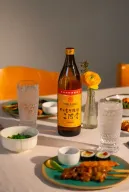
The barley highball is one of the most common ways shochu gets drunk in Japan. Clean spirit, cold soda, nothing in the way.
A clean mugi does under citrus what a neutral shochu does, with a little more grain left behind it. Bitter, bright and forgiving. Ruby or white both work; white is drier. The grapefruit sour is a real bar order in Japan, not a novelty.
One part shochu to three or four parts of the long mixer, over plenty of ice, then the accent on top. If it tastes thin, go two to three next time.
What it tastes like
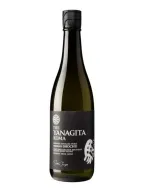
Mugi shochu from Sanwa Shurui in Oita. We haven't found tasting notes for this one. The profile below is the style rather than the bottle.
barley
This is what mugi shochu usually tastes like, not this bottle's own profile.
What to mix with it
These start from what mugi shochu usually likes, because nothing we've found places this bottle's own flavours. Tap a family to narrow it down. Every suggestion carries its reasoning, so if the reasoning does not convince you, ignore the suggestion.
A longer wedge is a family we'd reach for sooner with this bottle, worked out from its flavours rather than tasted. It isn't a score, or a comparison with other bottles.
Juice and peel are two different tools. Fresh juice, never bottled, is the whole basis of the lemon sour and the quickest way to put acid into a distilled base. The peel expressed over the top gives the oil and no acid at all, which is what a sweet or roasted bottle usually wants instead.
The lemon sour is an izakaya staple. Bars usually build it on a neutral shochu, and a clean mugi does the same job with a little more grain behind it.
The lemon sour is the drink most izakaya sell more of than anything else on the list
Roasted buckwheat, in any Japanese grocery, hot or cold. In a soba restaurant the same serve is made with soba-yu, the starchy water the noodles were boiled in, which is thicker and cannot be bought.
Roasted buckwheat and roasted barley are one idea arrived at from two grains
Roasted buckwheat, in any Japanese grocery, hot or cold. In a soba restaurant the same serve is made with soba-yu, the starchy water the noodles were boiled in, which is thicker and cannot be bought.
Oita's citrus, softer than sudachi. Bartenders in Oita mix it with the local barley shochu and soda.
A clean mugi does under citrus what a neutral shochu does, with a little more grain left behind it.
Kabosu and barley shochu are both Oita's, and kabosu gets squeezed into drinks there; the gentler acid suits a mugi wherever it was distilled
Harder to find outside Japan than most of this list. Worth ordering or a trip to a Japanese grocery, and where something easier works as well, that comes first.
A small green citrus from Tokushima, sharper and more herbal than lime. Sold frozen or as juice in Japanese markets.
A clean mugi does under citrus what a neutral shochu does, with a little more grain left behind it.
Sharper and greener than the lemon a barley sour usually gets, which is what makes it worth the trip from Tokushima
Harder to find outside Japan than most of this list. Worth ordering or a trip to a Japanese grocery, and where something easier works as well, that comes first.
Hot water in the glass first, spirit poured on top so it mixes itself. Around 40C in the glass is the sweet spot. This is not the only way, it is one way.
Mugi oyuwari in winter, with an umeboshi
Barley has less to open up than sweet potato, so water shows you exactly what is there. That is a fair test and not always a flattering one: a thin mugi has nowhere to hide in it.
Soft water, cold, over ice or not. One to one is normal. Mix a day ahead (maewari) and the edges round off.
Six parts shochu to four parts water, the classic
Barley has less to open up than sweet potato, so water shows you exactly what is there. That is a fair test and not always a flattering one: a thin mugi has nowhere to hide in it.
Hoppy Beverage Co. has made it in Tokyo since 1948; at 0.8 percent it is legally a soft drink, and it is hard to find outside Japan. Chill the bottle, the shochu and the mug and no ice is needed.
The barley highball is one of the most common ways shochu gets drunk in Japan. Clean spirit, cold soda, nothing in the way.
Bitter orange: sour and aromatic rather than sweet, the citrus that goes into ponzu. Bottled juice is sold for cooking and works straight in a glass. Use the peel too, it carries most of the smell.
A clean mugi does under citrus what a neutral shochu does, with a little more grain left behind it.
Harder to find outside Japan than most of this list. Worth ordering or a trip to a Japanese grocery, and where something easier works as well, that comes first.
A Miyazaki citrus eaten with the white pith left on, which is sweet rather than bitter. Gentler and more floral than lemon, so it flavours a drink without taking it over.
A clean mugi does under citrus what a neutral shochu does, with a little more grain left behind it.
Harder to find outside Japan than most of this list. Worth ordering or a trip to a Japanese grocery, and where something easier works as well, that comes first.
Sweet, low-acid Japanese mandarin. Juice it or drop segments in a glass. It needs a squeeze of something sharper alongside.
A clean mugi does under citrus what a neutral shochu does, with a little more grain left behind it.
Harder to find outside Japan than most of this list. Worth ordering or a trip to a Japanese grocery, and where something easier works as well, that comes first.
Okinawa's own citrus, picked green and sharp, more bitter than lime and more floral than sudachi. Squeezed over awamori and soda it is what the islands actually drink.
A clean mugi does under citrus what a neutral shochu does, with a little more grain left behind it.
Harder to find outside Japan than most of this list. Worth ordering or a trip to a Japanese grocery, and where something easier works as well, that comes first.
The Japanese citrus that tastes like grapefruit, mandarin and lemon at once, with a floral peel. A little zest or juice goes a long way.
A clean mugi does under citrus what a neutral shochu does, with a little more grain left behind it.
Harder to find outside Japan than most of this list. Worth ordering or a trip to a Japanese grocery, and where something easier works as well, that comes first.
Cold-pressed juice or thin slices. Green apple is already in the aroma of a lot of rice shochu, so this amplifies what is there rather than adding something new.
Barley's light sweetness reads as orchard fruit already, so apple and pear extend the bottle rather than decorate it.
Two slices from any Asian grocery, seeds out. It keeps getting more bitter the longer it sits, so taste as you go and pull the slices when it is where you want it.
A clean barley highball takes a garden note without losing its own grain under it.
Young sansho leaves, clapped between the palms and floated. Hard to find outside Japanese markets in spring, worth the hunt.
A clean barley spirit takes herbs the way vodka does, but with a cereal sweetness underneath that gives them something to sit on.
Harder to find outside Japan than most of this list. Worth ordering or a trip to a Japanese grocery, and where something easier works as well, that comes first.
Torn leaves steeped briefly. Perfumed citrus without juice.
A clean barley spirit takes herbs the way vodka does, but with a cereal sweetness underneath that gives them something to sit on.
Harder to find outside Japan than most of this list. Worth ordering or a trip to a Japanese grocery, and where something easier works as well, that comes first.
The Korean-style yuzu preserve sold in jars. A spoon in hot water with shochu, or shaken cold.
Yuzu tea and barley shochu in hot water is a winter izakaya drink
Harder to find outside Japan than most of this list. Worth ordering or a trip to a Japanese grocery, and where something easier works as well, that comes first.
Eden Foods sells it as Ume Plum Vinegar in most US supermarkets, and it is one of the cheapest things on this list. A bar spoon, and unlike a crushed umeboshi it can go into a shaken drink.
Eden Foods sells it as Ume Plum Vinegar in most US supermarkets, and it is one of the cheapest things on this list. A bar spoon, and unlike a crushed umeboshi it can go into a shaken drink.
Sakamoto's, fermented outdoors in earthenware jars in Fukuyama and aged at least a year; Toiro and Japanese Taste ship it in the US. A teaspoon in a mizuwari is the whole intervention, and a second one is usually a mistake.
Sakamoto's, fermented outdoors in earthenware jars in Fukuyama and aged at least a year; Toiro and Japanese Taste ship it in the US. A teaspoon in a mizuwari is the whole intervention, and a second one is usually a mistake.
Harder to find outside Japan than most of this list. Worth ordering or a trip to a Japanese grocery, and where something easier works as well, that comes first.
Ways to serve it
Mizuwari (with water)
On the rocks
Barley is the easiest shochu to hand to someone who has never had any. It behaves like a clean grain spirit with a little cereal sweetness, so a highball with lemon needs no explaining and no apology.
Cocktails other people made
We haven't found a cocktail written for this exact bottle. These were written for other bottles, so each one says which, and what changes if you pour this instead.
If a recipe calls for something else and this is what you have. The verdict is for this bottle rather than for its style, so a bottle without the strength a stirred drink needs is not offered for one.