Tea is in this bottle, not just on its nose, so this doubles it rather than introducing it.
Pepper wakes up savory bottles. A few grinds over the top. Aroma more than heat.
One part shochu to three or four parts of the long mixer, over plenty of ice, then the accent on top. If it tastes thin, go two to three next time.
What it tastes like
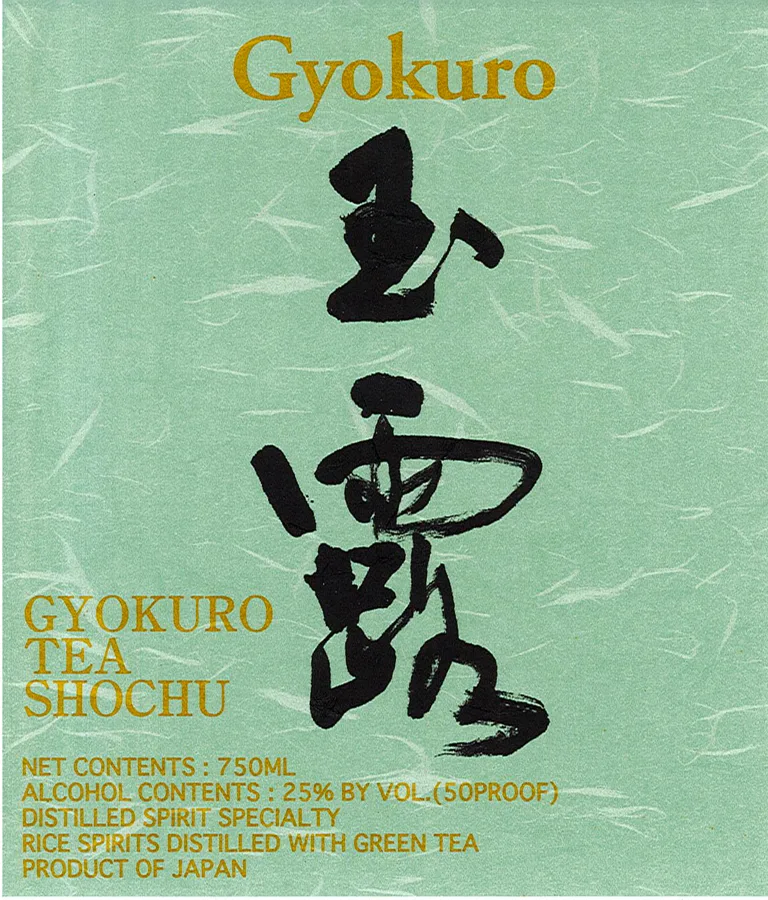
Distilled with gyokuro, Japan's most expensive tea leaf, alongside Fukuoka rice and yellow koji, which keeps the result light and fragrant rather than bitter. Rich green tea aroma with seaweed and bergamot, savory and mellow on the palate, finishing smooth like green tea ice cream, with no added sugar.
tea
umami
savory
rich
smooth
creamy texture
Sweet
1/5
Body
3/5
Aroma
4/5
Fruit
not described
Floral
not described
Grain
1/5
Earth
2/5
Umami
3/5
Read from the words above rather than measured. Where it says not described, none of the sources behind this page mention it, which is not the same as it not being there.
Base
gyokuro tea leaves and Fukuoka-grown rice
Koji
yellow koji (sake koji)
ABV
25%
What to mix with it
This bottle is made with tea, not merely reminiscent of it. A mixer meets the tea first and the grain second, so read these as answers to the tea rather than to the barley or the rice. Tap a family to narrow it down. Every suggestion carries its reasoning, so if the reasoning does not convince you, ignore the suggestion.
A longer wedge is a family we'd reach for sooner with this bottle, worked out from its flavours rather than tasted. It isn't a score, or a comparison with other bottles.
A small piece steeped in the bottle overnight. Savory depth without salt.
Kombu pushes the glass further toward the savoury side a bottle with umami is already on
Salt does not make a drink salty in small amounts. It makes a savoury bottle taste more like itself. The pairing reads as strange and drinks as obvious.
A bar spoon, no more. Salt, and the savory note that comes with it.
Salt brings umami forward
Salt does not make a drink salty in small amounts. It makes a savoury bottle taste more like itself. The pairing reads as strange and drinks as obvious.
A pinch in the glass or a half rim. Salt does not make a drink salty in small amounts; it makes it taste more like itself.
Salt is the fastest way to make umami louder
Salt does not make a drink salty in small amounts. It makes a savoury bottle taste more like itself. The pairing reads as strange and drinks as obvious.
One salted plum, crushed with a spoon in the glass. Salty, sour, savory.
Salt and sour pull umami forward
Salt does not make a drink salty in small amounts. It makes a savoury bottle taste more like itself. The pairing reads as strange and drinks as obvious.
Eden Foods sells it as Ume Plum Vinegar in most US supermarkets, and it is one of the cheapest things on this list. A bar spoon, and unlike a crushed umeboshi it can go into a shaken drink.
Salt and acid arrive together, which is what a salted rim does for a margarita
Salt does not make a drink salty in small amounts. It makes a savoury bottle taste more like itself. The pairing reads as strange and drinks as obvious.
Cynar, 16.5 percent, which is weaker than most shochu, so equal parts with a 25 percent bottle lands near 20 and the drink stays long. Soda or a grapefruit soda over the top is the producer's own serve.
With a 25 percent bottle under it the bitterness reads as celery and walnut skin instead of being scorched off
Both halves of the glass are savoury, which is unusual for a bitter drink
Mikawa Mirin from Sumiya Bunjiro Shoten, made from glutinous rice, koji and shochu since 1911 with no added sugar. Not the sweetened seasoning sold as mirin-fu chomiryo, which is a different product.
It adds body and savour where a sugar syrup would only add sugar
Sweet and savoury at once is what mirin is for in a kitchen, and the glass is no different
The Kyushu condiment, in a tube in any Japanese grocer: fermented yuzu peel, green chili and salt. A quarter teaspoon stirred into an oyuwari, which is the serve Asahi publishes.
The salt in it raises the perceived sweetness of koji
The chili leaves warmth at the back rather than heat on the tongue
Harder to find outside Japan than most of this list. Worth ordering or a trip to a Japanese grocery, and where something easier works as well, that comes first.
Hoppy Beverage Co. has made it in Tokyo since 1948; at 0.8 percent it is legally a soft drink, and it is hard to find outside Japan. Chill the bottle, the shochu and the mug and no ice is needed.
Carbonation carries aroma up out of the glass, so a highball shows an aromatic bottle off rather than diluting the point of it.
Lustau or González Byass. Fino is salt and living flor; this is what is left after the flor dies, and at 18 percent an ounce lengthens the glass rather than strengthening it.
Flor leaves a savoury edge behind it, and koji leaves the same one
Giffard's white, or Tempus Fugit's, which is a pale brown rather than colourless. Tempus Fugit publishes 24 percent, so on a 25 percent shochu an ounce lengthens rather than fortifies, and on a 40 percent bottle it pulls the strength down.
Cocoa wants a little weight under it, and a creamy bottle has it
The cordial, sweet and alcohol-free, poured like a syrup. Muscat, lychee and honey in one flower. The liqueur has its own entry below: a different product rather than a stronger or weaker version of this one, and it brings alcohol along with the flower.
Nothing here is sharp enough to cut the elderflower down, so it survives at the strength it was poured
Two slices from any Asian grocery, seeds out. It keeps getting more bitter the longer it sits, so taste as you go and pull the slices when it is where you want it.
The Okinawa brewers' association publishes a goya cocktail of its own, so this is not an idea from outside
Hot water in the glass first, spirit poured on top so it mixes itself. Around 40C in the glass is the sweet spot. This is not the only way, it is one way.
The Japanese Bitters, five 100ml expressions, sold at Astor Wines in New York. Angostura at nearly 45 percent is a small spike in a 25 percent drink in a way these are not.
The Umami expression is kelp, shiitake and bonito, aimed at the savoury side the bottle is described with
Carpano Antica or Cocchi. A quarter of the shochu's volume, stirred cold, makes a manhattan-style drink: on a 25 percent shochu that is about 23 before the ice gets to it, where a 40 percent rye starts nearer 35.
There is enough weight here to carry vermouth without being flattened
Sakamoto's, fermented outdoors in earthenware jars in Fukuyama and aged at least a year; Toiro and Japanese Taste ship it in the US. A teaspoon in a mizuwari is the whole intervention, and a second one is usually a mistake.
A vinegar with savour under it rather than only sharpness, so beside a savoury bottle it reads as family instead of contrast
Harder to find outside Japan than most of this list. Worth ordering or a trip to a Japanese grocery, and where something easier works as well, that comes first.
Ways to serve it
On the rocks
Mizuwari (with water)
With soda
The bases with no family of their own: sake lees, chestnut, corn. There are no style rules on this page, which is deliberate. What each bottle is described as tasting of is doing the whole job, so the suggestions come from that rather than from anything the category is supposed to want.
Cocktails other people made
We haven't found a cocktail written for this exact bottle. These were written for other bottles, so each one says which, and what changes if you pour this instead.